
HONOURABLE MENTION
2025 // PHOTO ESSAY
Alessandra Manzotti
Extreme Living – The Winter Migration
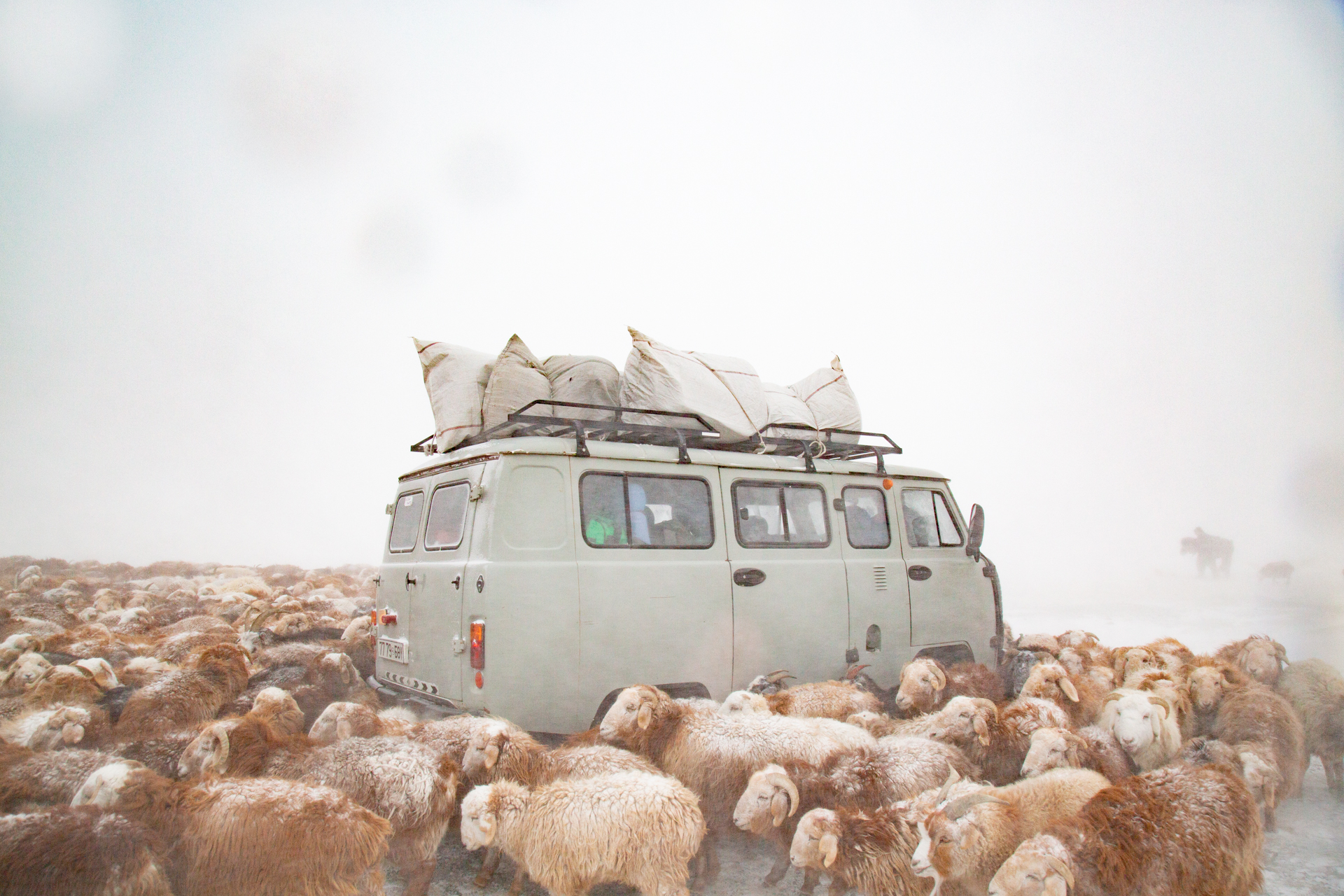
Every year, during the months of February and March about 200 nomadic eagle hunting families embark on a treacherous 5 days, 150km long Winter migration toward their Spring camp in the remote reaches of the breathtaking Altai Mountains of Western Mongolia, in the hope of finding better pastures for their prized livestock. Here they will stay for about 3-4 month before moving on to their summer camp. On average they migrate 3-4 times a year.
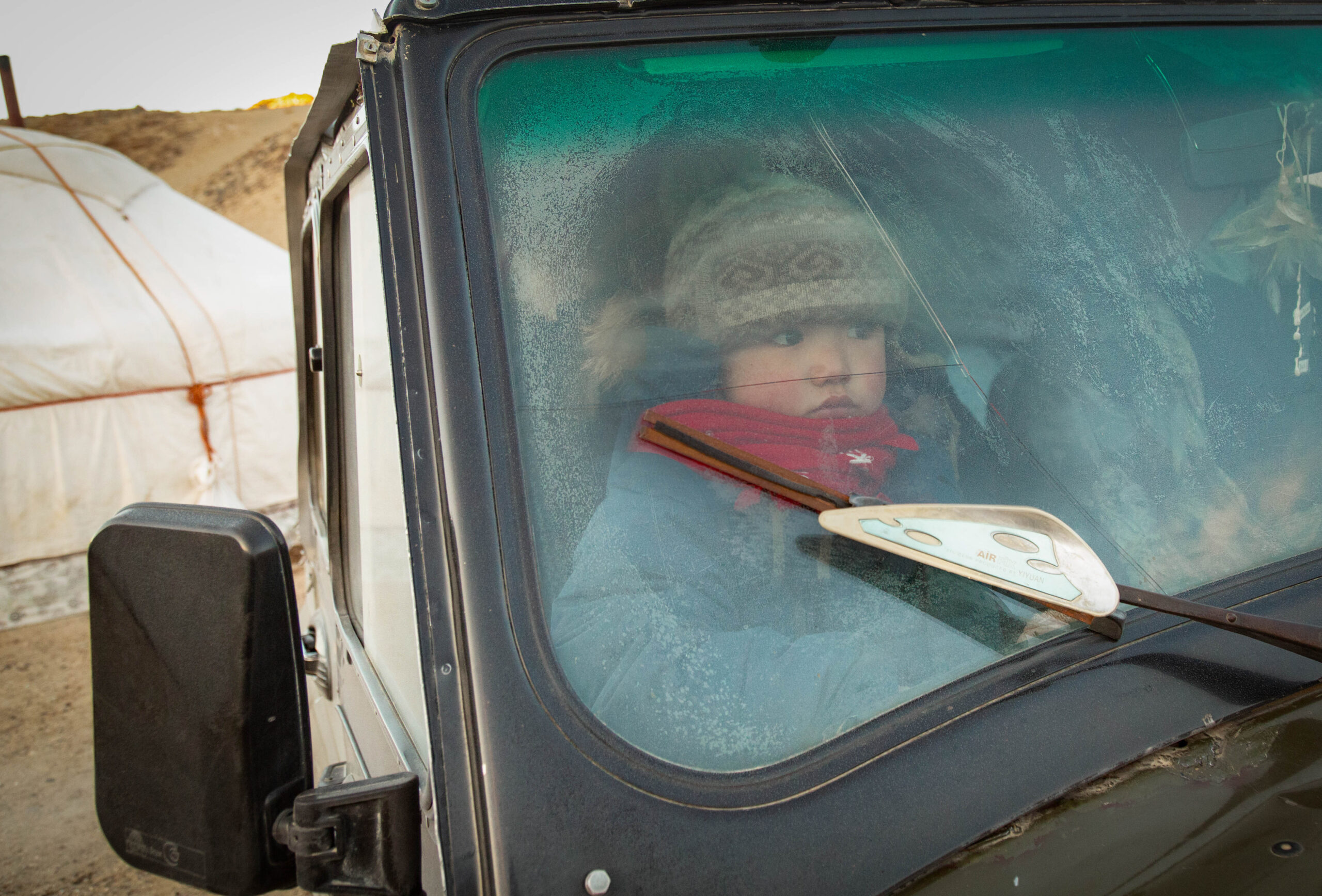
Winters here are unforgiving with temperatures plummeting well below freezing (-40C) and fierce winds and snow blizzards sweeping across the open planes at any given time. While in the older days the entire family made the journey on foot or on horseback, today things are a bit different. Women, very young children and the elderly travel to their spring camp on a truck along with all the family’s belongings which often include sick, old, injured and newborn animals, who would otherwise not be able to survive the journey. The bulk of the herd, however, usually between 500-1500 animals comprised of Bactrian camels, goats, cows, horses, and yaks, has no choice but to make this extraordinary journey on foot led by the younger men of the family on horseback.
The winter migration is a test of endurance for both humans and animals alike.
For over 5 days there is no food for the animals to graze on as they move from extremely dry and bare land to snowy passes and expanses.
It was an incredible experience to witness first-hand how resilient some of these animals are, especially the Bactrian camels who are the power houses of the migration. Their thick fur allows them to withstand extreme temperatures. They are remarkably strong and play a vital role in the life of nomads. During the winter migration they carry portable Gers (traditional round-shaped dwelling), stoves, food, supplies, and often other animals who can no longer walk.
But unfortunately, way too often the combination of exhaustion, lack of food and extreme temperatures can be deadly for many animals.
In recent years the Altai region has experienced very unpredictable weather patterns, and this year alone it was reported that “Dzud” the Mongolian term for a harsh winter or a particularly cold spell, was responsible for the loss of over 1.5 million livestock.
Despite the challenges they face they have an incredible sense of pride in their way of life. They are strong and resilient. They often approach difficulties with resourcefulness and a strong determination to overcome obstacles. They have a deep connection to their animals and an uncanny ability to not just adapt but thrive in such harsh conditions.






Explore More Photo Essays
Logan White
Logan White

Stefan Gröpper
Stefan Gröpper
Andrea Francolini
Andrea Francolini
Trevor Cole